Rippijuhlat: organising the party and sharing the photos with the whole family
Published August 8, 2026 · The Fotelya team
Rippijuhlat brings relatives, godparents and family friends together to celebrate a young person after their confirmation service. A calm plan for the welcome, coffee table, speeches, gifts and shared photographs lets the family enjoy the occasion instead of managing it minute by minute.
The short answer
To organise rippijuhlat, plan the gathering around the konfirmaatio service, prepare a simple coffee table, agree who will welcome guests and leave space for speeches and gifts. Set up photo sharing before the party, not afterwards: place one QR code where guests can see it and provide a direct album link for kummit, grandparents and anyone who prefers not to scan.
Start with the shape of the day
The church service gives the day its natural rhythm. Guests may arrive at the family home, a parish space or another venue after the service, so allow enough breathing room for greetings, travel and any photographs taken outside the church. Avoid scheduling the first formal moment immediately upon arrival. Coats need to be put away, older relatives may want to sit down, and the young person will probably be greeted several times.
Choose a format that suits the family rather than trying to reproduce somebody else’s celebration. A relaxed afternoon with coffee, cake and savoury food can feel every bit as meaningful as a more formal reception. What matters is that guests understand where to go, when food is served and whether there will be a speech, prayer or gift moment.
Give a few people clear roles
A small division of responsibility prevents the hosts from answering every question. One person can welcome guests, another can watch the serving table, and someone can make sure planned speeches happen at an unhurried moment. If photographs matter to the family, ask one relative to check that the shared album instructions remain visible and help anyone who needs assistance.
The person being celebrated should also have a say. After rippikoulu and the intensity of confirmation day, some young people enjoy being at the centre of the room, while others prefer a quieter gathering. Agree beforehand how formal the programme will be and which photographs may be shared beyond the family.
Plan a coffee table that works for every generation
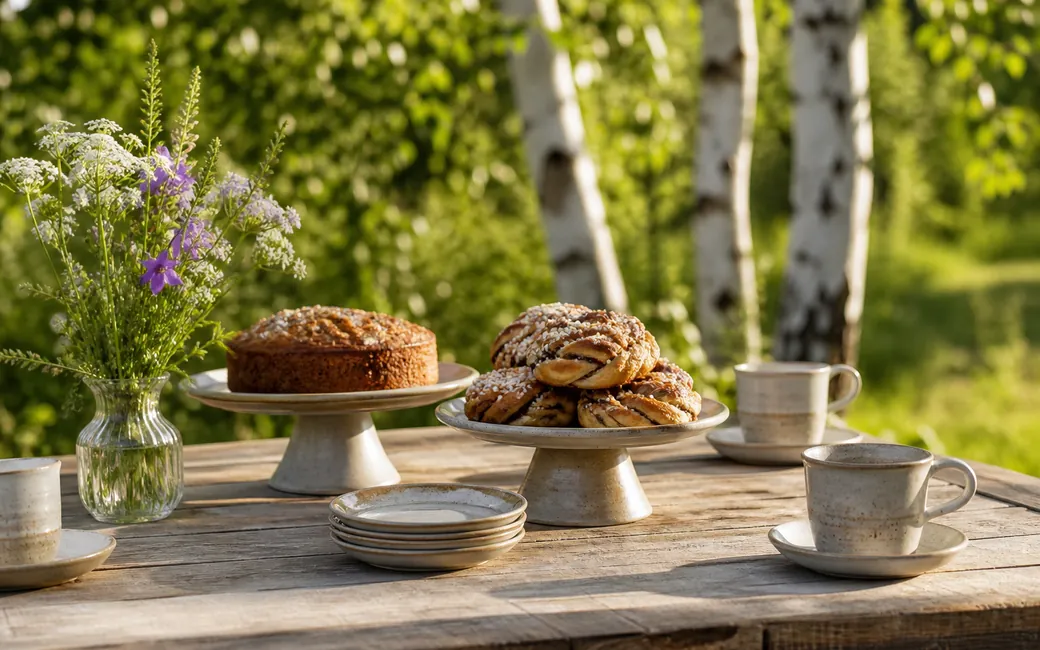
The Finnish coffee table tradition suits rippijuhlat particularly well because guests can serve themselves and talk at their own pace. Kakkukahvit may be the heart of the table, accompanied by savoury dishes that make the gathering feel like a proper family occasion. A smaller selection served well is often more welcoming than a crowded table that requires constant attention.
Think about how guests will move through the room. Keep cups, plates and cutlery easy to find, and leave enough space for someone carrying a walking stick or helping a child. Put frequently needed items within comfortable reach. If coffee is served separately from food, make the route clear so people do not gather in one narrow spot.
Ask about allergies and dietary needs when inviting guests, then label dishes plainly. There is no need for elaborate cards: clear names and a short indication of relevant ingredients are more useful than decorative wording. Keep serving utensils with the correct dishes and reserve covered portions when cross-contact may be a concern.
Prepare for replenishing, not perfection
Set aside backup cups, napkins and serving dishes before guests arrive. Food that needs to stay chilled can be brought out in smaller batches, while cakes can be arranged so that cutting and serving remain easy. This keeps the table fresh and gives the hosts fewer reasons to leave the room during conversations or speeches.
Handle speeches, gifts and etiquette with a light touch
Rippijuhlat etiquette is warm rather than rigid. Guests usually greet and congratulate the young person, speak with the family, enjoy the coffee table and present cards or gifts. Clean, festive clothing is appropriate, but the church, venue and family’s own style should guide how formal everyone dresses.
Speeches work best when they are brief, personal and audible. A parent, grandparent or godparent may say a few words about the young person, the day and the path ahead. If several people hope to speak, quietly agree on an order beforehand. That avoids an awkward pause in which nobody knows whether the programme has started.
Choose a gift moment that feels natural. Some families open gifts while everyone is gathered; others place cards and parcels on a table and open them more privately. Tell close relatives what the young person prefers, especially if public reactions would feel uncomfortable. A basket or clearly marked space for cards also prevents envelopes from being misplaced.
Hosts do not need to entertain guests continuously. Introductions between relatives, a comfortable place to sit and an easy flow around the coffee table are often enough. The celebration should leave room for ordinary family conversation, because those exchanges are part of what makes the day memorable.
Plan the photographs before guests arrive
Families usually remember to nominate someone to take a portrait after the service. They are less likely to plan for all the other pictures: grandparents talking over coffee, cousins together in the garden, the cake before it is cut, a godparent’s speech or a quiet photograph of the decorated table. Those images are spread across many phones by the end of the day.
Create one shared event album in advance and treat it like another part of the hosting plan. Put a QR code in a small frame on the coffee table or beside the guest book, where people will naturally notice it. Add a plain sentence explaining that guests can contribute their photographs and videos. Mention it once when most people have arrived, without turning the party into a technical demonstration.
Fotelya provides this setup through the browser: guests scan the code and upload without installing an app or creating an account. The family can moderate contributions, download the files in original quality afterwards and pay once for the event rather than taking out a subscription.
Keep the request personal
Guests respond better to a family request than to a generic instruction. A simple note such as “Please add your photos from today to our family album” explains both the action and its purpose. Ask people to contribute candid moments as well as posed portraits, while respecting anyone who does not want their image shared.
Do not rely on the QR code alone. Keep the direct album link ready to send in the family message thread or by email after the party. This also helps guests who took photographs with a camera, left their phone elsewhere or prefer uploading when they return home.
Make photo sharing comfortable for grandparents and kummit
Technology should not become a test of confidence. Many older relatives are perfectly comfortable with links and phone cameras, while others may be cautious about unfamiliar services, passwords or app stores. A browser-based album with no account removes several unnecessary steps, but a calm human explanation still makes the experience easier.
Show the QR code together with short written instructions. If someone asks for help, let them use their own device and guide them through the steps rather than taking control of the phone immediately. Explain what will happen before they tap anything, particularly when the browser asks permission to select photos or videos.
A direct link is especially useful for relatives who want to view the album without contributing. Send it with a clear message saying who created the album and what it contains. People are more likely to open an unfamiliar link when it arrives from a family member with a recognisable explanation.
Think beyond uploading. Grandparents may want a printed photograph, and kummit may appreciate a small selection they can save easily. Once the family has collected the files, choose a few strong images for printing or a private thank-you message. The shared album gathers the material, but the keepsake can take whatever form suits the recipient.
Respect remains part of accessibility. Do not pressure anyone to scan, upload or appear in pictures. Make it easy to participate, offer help discreetly and allow relatives to enjoy the celebration without using a phone at all.
After the party, preserve the complete family record
Photo collection works best when the follow-up is prompt and specific. Send the album link with the thank-you message and invite guests to add anything still on their phones. Instead of asking vaguely for “all the photos,” remind them that candid family moments, short videos and pictures from outside the church are welcome.
Review the album before distributing it more widely. Remove accidental uploads, repeated files and anything that does not respect the young person’s wishes. If a guest appears in a sensitive or unflattering image, ask before including it in a printed collection or sharing it beyond the original group.
Download the original files and store them with the family’s other important photographs. Use a clear folder name, keep a backup in a separate location and preserve any videos as well as still images. A shared online album is convenient for gathering and viewing, but the family archive should not depend on a single link.
Finally, select a manageable set for relatives who do not want to browse a large gallery. A few carefully chosen photographs can tell the story of the service, the coffee table, the speeches and the people who came together. The result is more than documentation: it is a family keepsake shaped by many viewpoints rather than only the host’s camera.