Hosting a corporate evening without anyone sighing
Published on July 26, 2026 · The Fotelya team
A corporate evening brings together people who did not choose to spend the evening together. This is the starting constraint, and it rules out half of the activities we usually propose. Here is what actually works, from seminars to year-end parties.
The constraint no one dares to mention
At a wedding, everyone came out of affection. At a corporate evening, some of the attendees are there because not attending would draw attention. This is not a minor detail: it radically changes what works.
An activity that assumes spontaneous enthusiasm falls flat. An activity that exposes individuals makes people uncomfortable, especially when there is a hierarchy in the room. What works are activities you can participate in halfway, without declaring yourself, and leave without justification.
The test to run before choosing
Ask yourself a simple question: can the most reserved person in the team go through this activity without being exposed? If the answer is no, it will create discomfort for some of your colleagues, no matter how enthusiastic the others are.
What works, depending on the type of evening
Seminar and convention
Informal moments matter more than the program. A well-thought-out coffee break does more for cohesion than a forced workshop. What works: short formats between sessions, team challenges that don’t require anyone to speak in front of the room, and a single point to collect photos from the day that everyone can contribute to at their own pace.
Year-end party
Expectations are different: people come to unwind, not to work. Overly structured activities are poorly received. What works: a photo corner with a few props, a screen displaying moments from the year, an informal and kind awards ceremony, provided it doesn’t always reward the same people.
After-work and small gatherings
With fewer than thirty people, anything that resembles an organized activity feels forced. It’s better to focus on the setting, the music and good drinks, and simply provide a single point to collect photos to keep a record.
Inauguration and client evening
Here, the goal is not cohesion but image. Activities must produce usable content for future communication: shareable photos, testimonials, images of the venue. This is the only case where the activity has measurable returns.
Photos: the blind spot of corporate evenings
The day after a corporate evening, internal communications look for images and find none. The photographer, if there was one, will deliver in two weeks. The real photos of the evening are on attendees’ phones, and they won’t leave there.
Why usual channels don’t work
Asking people to send photos via internal messaging works for three people. Creating a discussion group mixes professional and private life, which many rightly refuse. Sharing via a public link, on the other hand, raises real privacy concerns.
What works
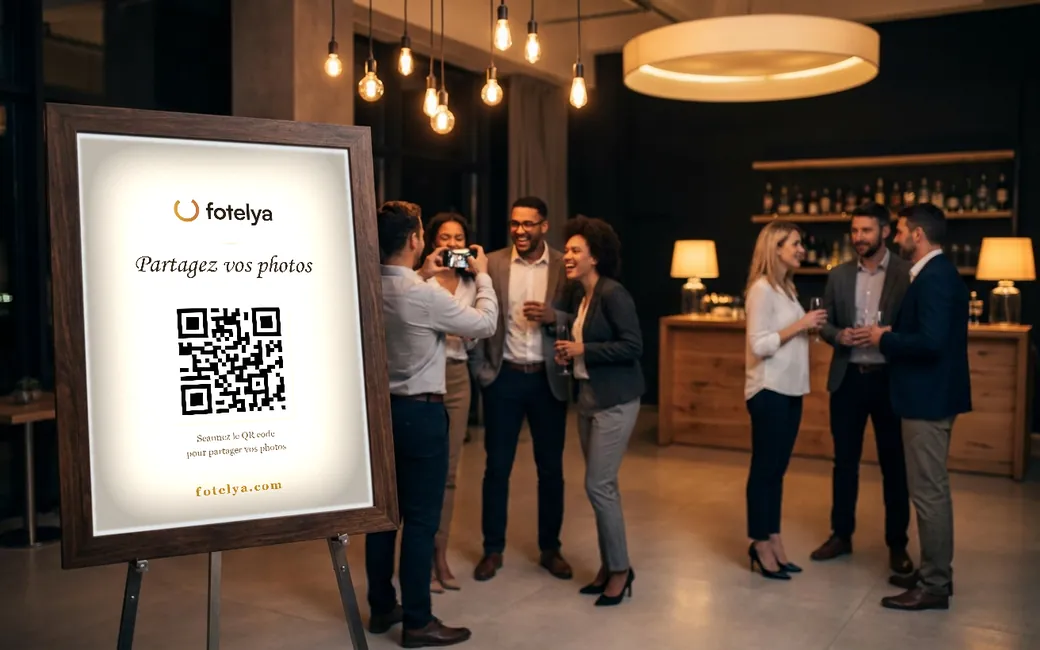
A single drop-off point, accessible via a code displayed on site, without requiring an account or app installation. Everyone deposits what they want, the company receives a complete album the next day, and the album is then closed.
The framework to respect, and it’s not optional
Photographing employees and sharing these images engages the employer. Three points should be addressed before the evening rather than after a complaint.
Inform them, simply
A single line in the invitation is enough: photos will be taken, here’s what they’ll be used for, here’s how to request an image be removed. This covers most situations.
Distinguish internal use from public communication
A photo shared internally is not the same as one published on the company’s social media. The latter requires consent from recognizable individuals, and it’s better to collect it before publishing than after.
Set a duration and know where the files are
These images are personal data. A stated retention period, hosting in a known country and effective deletion at the deadline: these three points are enough to stay compliant and avoid an unpleasant conversation with legal six months later.
The successful process, in summary
- Two activities maximum per evening, no more.
- No activity that singles out one person in front of the group.
- A short format, ten minutes, and it can be restarted later if needed.
- An option to opt out without having to justify your decision.
- A designated photo collection point announced upon arrival.
- A clear mention of image usage in the invitation.
- A designated person responsible for launching each activity.